

Contents
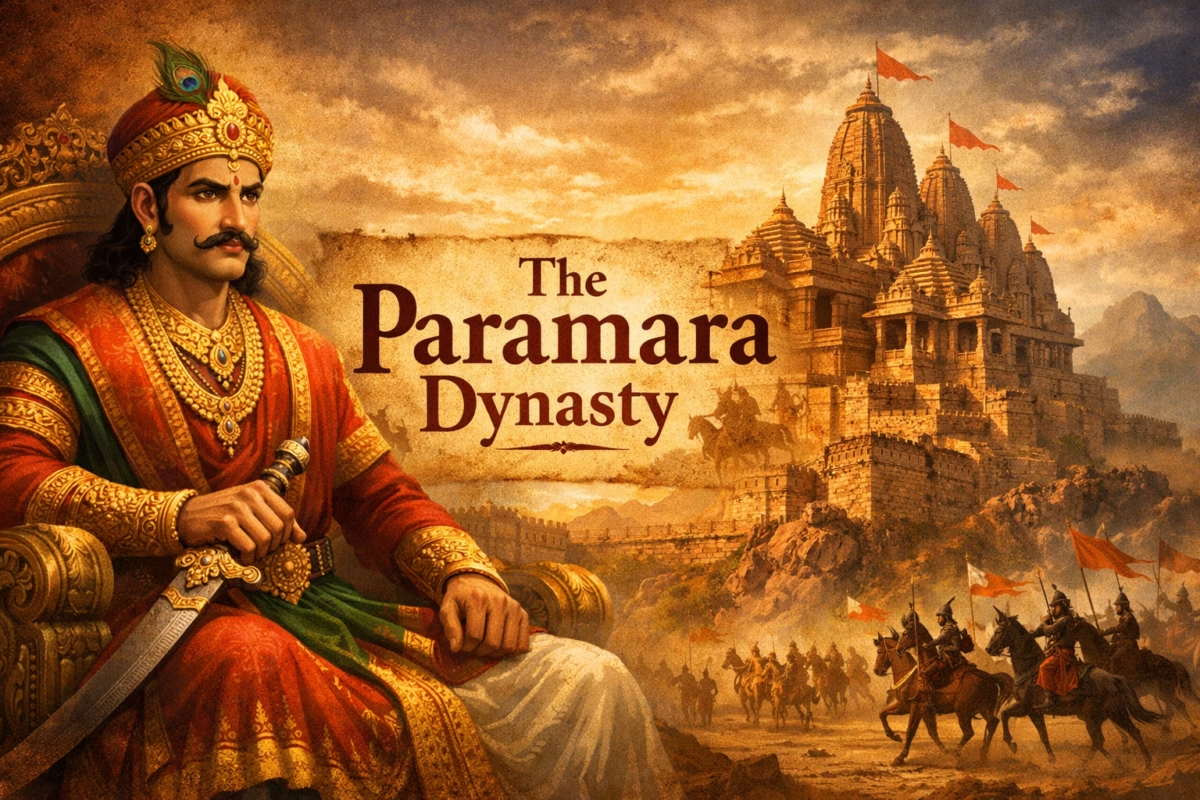
The Paramara Dynasty (9th–14th Century CE) was a powerful Rajput clan that ruled the Malwa region in Central India. Known for their patronage of art, literature, and temple architecture, they played a pivotal role in the resistance against early Islamic invasions.
| Category | Details |
| Region | Malwa (Modern Western Madhya Pradesh) |
| Capital | Dhara (Modern Dhar) |
| First Independent Ruler | Siyaka II (Harsha) |
| Most Famous Ruler | Raja Bhoja (Bhoja I) |
| Architecture Style | Maru-Gurjara & Bhumija style |
| Final Decline | Annexed by Alauddin Khalji (1305 CE) |
| Political Status: | Started as feudatories of the Rashtrakutas before becoming a sovereign power. |
Chronological History of Paramara Rulers
1. Upendra (c. 800 – 818 CE)
- The Founder: Established the dynasty in the Malwa region.
- Geopolitics: The kingdom was situated to the west of the Kalachuri dynasty. During this period, the Paramaras ruled as vassals to the Rashtrakuta Empire.
2. Siyaka II / Harsha (c. 948 – 972 CE)
- Independence: The real history of the Paramara dynasty as a sovereign power begins with Siyaka.
- Expansion: Taking advantage of the death of Rashtrakuta King Krishna III, he declared independence and sacked the Rashtrakuta capital, Manyakheta.
- Territory: He secured large portions of territory from both the Pratihara and Rashtrakuta empires.
3. Vakpati Munja (c. 972 – 995 CE)
- The Warrior King: Munja was the most glamorous king of the dynasty, celebrated for his gallantry in local ballads.
- Military Campaigns: He was a fierce warrior who launched an aggressive campaign against the Western Chalukya King Taila II.
- Tragic End: Despite his military brilliance, he was eventually entrapped by Taila II and put to death in 995 CE.
4. Sindhuraja (c. 995 – 1010 CE)
- The Restorer: The younger brother of Munja, Sindhuraja successfully recovered the territories lost to Taila II.
- Literary Fame: His life is immortalized in the Navasahasanka-charita by the court poet Padmagupta.
5. Raja Bhoja I (1010 – 1055 CE)
- The Polymath: Successor to Sindhuraja, Bhoja is the most famous Paramara ruler. He was a scholar, builder, and conqueror.
- Literary Works:
- Samaranganasutradhara: A classic work on art, architecture (Vastu Shastra), and engineering.
- Commentary on Yogasutras: A brief but profound commentary on Patanjali’s Yogasutras showcasing his erudition.
- Cultural Contributions:
- Founded the city of Bhojapura.
- Patronized “Men of Letters” like Dhanapala and Uvata.
- Established the Bhojshala at Dhara for Sanskrit studies.
6. Udayaditya (c. 1060 – 1086 CE)
- The Builder: Brother of Bhoja and successor to Jayasimha.
- Architecture: He is credited with the construction of the famous Nilakantesvara Temple at Udayapur (in Bhilsa). This temple is the pinnacle of the Bhumija style of architecture.
7. Mahlak Deo (The Last Ruler)
- The Fall: The last known king of the Paramaras.
- Defeat: He faced the invasion of Alauddin Khalji’s forces.
- Legacy: In 1305 CE, Mahlak Deo was executed, and the Malwa region was annexed into the Delhi Sultanate.
Literary and Cultural Contributions
UPSC frequently focuses on the “Men of Letters” associated with royal courts.
- Raja Bhoja’s Works:
- Samaranganasutradhara: A classic treatise on civil engineering and Vastu Shastra.
- Sarasvatikanthabharana: A work on Sanskrit grammar and poetics.
- Yogavartika: A commentary on Patanjali’s Yoga Sutras.
- Court Scholars:
- Dhanapala: Author of Tilaka-Manjari.
- Padmagupta: Wrote Navasahasanka-charita (biography of Sindhuraja).
Architecture: The Udayeshwara Temple
Under Udayaditya, the dynasty saw the construction of the Nilakantesvara (Udayeshwara) Temple at Udaipur. It is a masterpiece of the Bhumija style of Nagara architecture, characterized by its unique miniature spires on the Shikhara.
Literary Works
| Author | Work | Subject |
| Raja Bhoja | Samaranganasutradhara | Architecture/Vastu |
| Raja Bhoja | Sarasvatikanthabharana | Grammar/Poetics |
| Padmagupta | Navasahasanka-charita | Biography of Sindhuraja |
| Dhanapala | Tilaka-Manjari | Prose Romance |
The Decline of the Paramaras
The dynasty faced constant pressure from the Solankis of Gujarat and the Yadavas of Devagiri.
- Mahlak Deo: The last known ruler.
- 1305 CE: Alauddin Khalji’s general, Ain-ul-Mulk Multani, defeated Mahlak Deo. Malwa was subsequently annexed into the Delhi Sultanate.+1
FAQs for UPSC Students
It was written by Padmagupta. It is the earliest available Sanskrit historical mahakavya of the Paramara dynasty, focusing on the life of King Sindhuraja.
The Bhumija style is a subtype of Nagara architecture developed in Malwa. It features a central projection on each side of the Shikhara, decorated with rows of miniature Shikharas (Urushringas).
Malwa was a fertile plateau situated on the trade routes connecting Northern India to the Deccan and the Western coast. This led to a prosperous economy based on both agriculture and trade-taxation.
Raja Bhoja built the Bhojshala as a temple to Goddess Saraswati and a major center for higher learning in Sanskrit. It remains a site of historical and archaeological significance today.
The Bhumija style (a subtype of Nagara architecture) is uniquely associated with the Paramaras, characterized by the miniature spires arranged in rows on the main Shikhara.
It was written by Raja Bhoja I. It is a comprehensive treatise on Indo-Aryan architecture, town planning, and even mechanical devices (Yantras).
The capital was Dhara (Modern Dhar, Madhya Pradesh). It became a major center for Sanskrit learning under Raja Bhoja.