

Contents
In recent years, the Union Public Service Commission (UPSC) has shifted its focus toward “Emerging Contaminants.” Airborne Microplastics (AMPs) have transitioned from a niche scientific concern to a critical topic for GS Paper III (Environment & Pollution). As these particles infiltrate the remotest corners of the Earth, understanding their lifecycle is essential for both Prelims and Mains.
1. Defining the Scale: Microplastics vs. Nanoplastics
Microplastics are broadly defined as plastic particles smaller than 5 mm in diameter. They are categorized based on their origin:
- Primary Microplastics: Intentionally manufactured small particles, such as microbeads in exfoliating soaps, detergents, and industrial “nurdles.”
- Secondary Microplastics: Result from the fragmentation of larger plastic items (bottles, bags, fishing nets) due to UV radiation, mechanical abrasion, and weathering.
The Nanoplastic Frontier
Particles smaller than 1 micrometer (µm) are termed Nanoplastics. Their significance in the UPSC syllabus lies in their biological impact; their minute size allows them to cross cellular membranes and the blood-brain barrier, posing a severe physiological risk.
2. What are Airborne Microplastics?
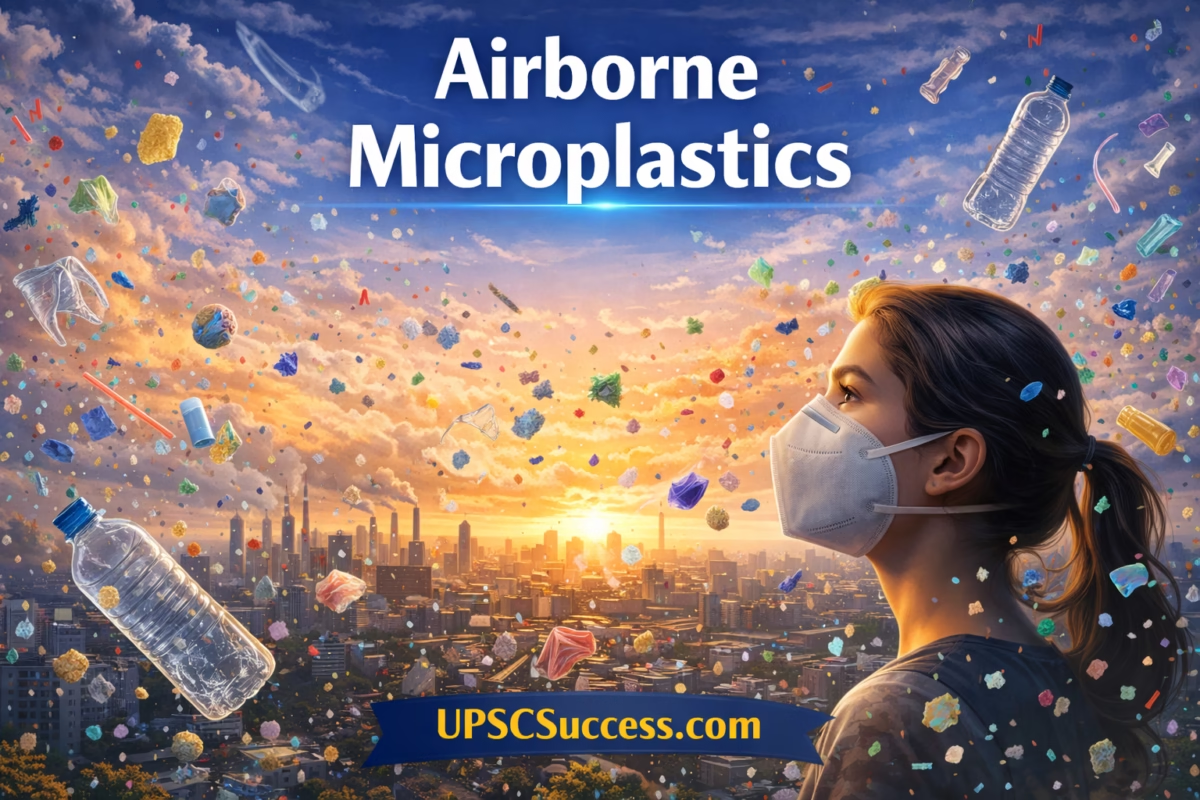
Airborne microplastics are tiny polymer fragments suspended in the atmosphere. Unlike heavier plastic debris, these are light enough to be transported by atmospheric currents over thousands of kilometers.
- Atmospheric Transport: They act as “aerosols,” traveling from urban centers to “pristine” zones.
- Global Deposition: Scientists have detected AMPs in Arctic snow, the Himalayan glaciers, and even the Marianas Trench via oceanic-atmospheric cycling.
UPSC Perspective: Why it Matters
In GS Paper I (Geography), the transport of microplastics is linked to Planetary Winds and the Hydrological Cycle. In GS Paper III, it relates to Environmental Degradation and Health.
3. Major Sources of Airborne Microplastics
To write a high-scoring Mains answer, one must categorize the sources of AMPs effectively:
| Source Category | Description & Impact |
| Synthetic Textiles | Washing and wearing fabrics like Polyester, Nylon, and Acrylic releases microfibers into the air and water. |
| Tyre Wear & Tear | One of the largest global sources. Friction between rubber tyres (synthetic polymers) and road surfaces creates “road dust” rich in microplastics. |
| Plastic Degradation | Large-scale mismanaged plastic waste breaks down under high temperatures and sunlight (Photodegradation). |
| Industrial Emissions | Dust from plastic manufacturing plants and the processing of raw polymer pellets. |
| Paints & Coatings | Weathering of road markings, marine paints on ships, and architectural coatings on buildings. |
| Household Dust | Abrasion of synthetic carpets, upholstery, and plastic packaging within indoor environments. |
4. Environmental and Health Implications
Airborne microplastics contribute to the “Albedo Effect” when deposited on glaciers (like the Himalayas). By darkening the ice surface, they absorb more heat, accelerating glacial melting—a critical concern for India’s water security.
From a health perspective, inhalation of these particles leads to oxidative stress, inflammation, and respiratory issues. The NFHS-5 and various WHO reports have increasingly highlighted the link between environmental pollutants and long-term non-communicable diseases.
Prelims & Mains Pointer
For Prelims (Quick Facts):
- Size: Microplastics < 5mm; Nanoplastics < 1µm.
- Key Source: Tyre wear is a dominant but often overlooked source of urban AMPs.
- Global Agreements: The UN Plastic Treaty (negotiations ongoing) aims to address the full lifecycle of plastics.
- India’s Stand: The Plastic Waste Management Amendment Rules, 2021 prohibited identified single-use plastic items and introduced Extended Producer Responsibility (EPR).
For Mains (Potential Question)
Q. “The ubiquity of airborne microplastics represents a ‘tragedy of the commons’ in the 21st century. Discuss the socio-environmental challenges posed by microplastics and suggest a multi-layered policy framework for India.” (15 Marks, 250 Words)
UPSC Mains Model Answer (GS Paper III)
The term “Tragedy of the Commons” aptly describes the microplastic crisis: while individuals benefit from cheap, versatile plastic, the global “commons”—air, soil, and oceans—suffer cumulative, irreversible degradation. Recent studies (2025) indicate that inhalable microplastics (iMPs) now constitute up to 5% of urban particulate matter in Indian metros, making them a “silent” addition to the air pollution crisis.
1. Socio-Environmental Challenges
- Health Inequity (Social): Vulnerable groups like street vendors and waste pickers face chronic exposure. Inhaled microplastics act as “Trojan Horses,” carrying heavy metals and endocrine-disruptors (phthalates) directly into the bloodstream.
- Glacial Melting & Water Security: Deposition on Himalayan glaciers reduces Albedo, accelerating melting. This threatens the perennial nature of rivers like the Ganga and Brahmaputra, impacting millions.
- Food Chain Contamination: Through “resuspension,” airborne particles settle on agricultural soil. Studies suggest plants can uptake nanoplastics, leading to biomagnification in the human diet.
- The “Plastisphere”: Airborne plastics provide a surface for pathogenic bacteria and fungi to travel across borders, potentially aiding the spread of Antimicrobial Resistance (AMR).
2. Current Regulatory Gaps in India
- Exclusion from AQI: The current National Ambient Air Quality Standards (NAAQS) monitor PM2.5 and PM10 but do not specifically track the polymer composition of these particles.
- Focus on “End-of-Life”: Policy has historically focused on waste collection rather than “upstream” prevention (e.g., textile shedding).
3. Suggested Multi-Layered Policy Framework
To tackle this, India needs a “Source-to-Sink” approach:
- A. Regulatory Layer (Monitoring):
- Integrate iMPs into the National Clean Air Programme (NCAP).
- Standardize “Microplastic Testing” protocols under the Plastic Waste Management (Amendment) Rules, 2024.
- B. Technological Layer (Mitigation):
- Textile Innovation: Mandate micro-filters in commercial and domestic washing machines (similar to French regulations).
- Green Buffers: Establish “Vertical Forests” and dense urban hedges to trap airborne fibers in textile hubs like Surat and Tirupur.
- C. Economic Layer (Incentives):
- Expand Extended Producer Responsibility (EPR) to include “synthetic fiber footprints” for fast-fashion brands.
- Subsidize R&D for “Circular Polymers” that leave zero microplastic residue.
- D. Global Layer:
- Actively lead negotiations in the UN Global Plastic Treaty to ensure technology transfer for plastic-free alternatives for the Global South.
Conclusion
Solving the microplastic “tragedy” requires moving beyond mere waste management toward a Circular Economy. By aligning the “LiFE” (Lifestyle for Environment) movement with strict industrial standards, India can protect its “commons” and set a global precedent for managing emerging atmospheric contaminants.